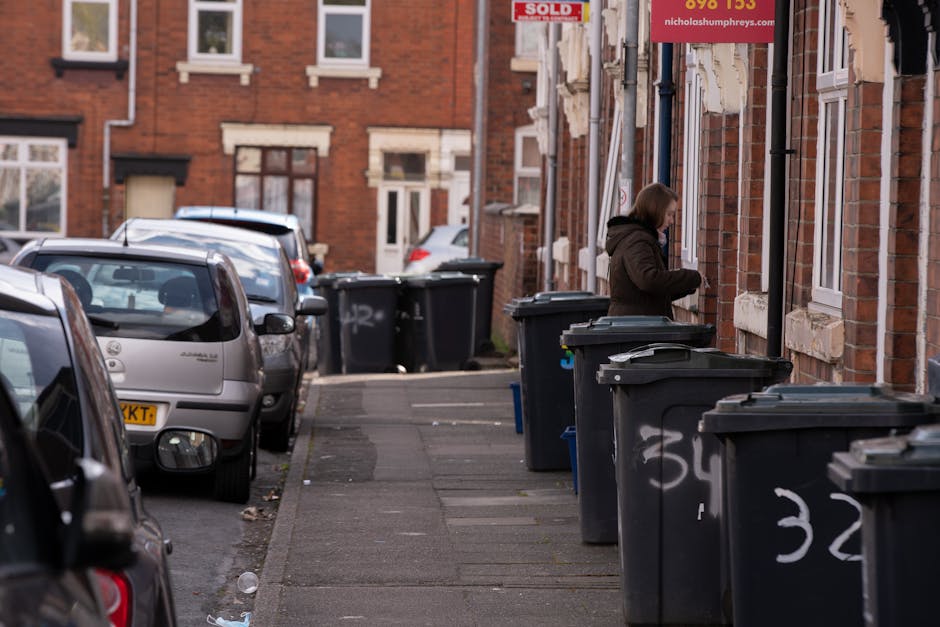
Beckenham High Street rubbish removal guide BR3 tips
If you are clearing out a flat, shop, office, or busy home near Beckenham High Street, rubbish removal can feel deceptively simple right up until it is not. Tight parking, mixed waste, awkward timing, and the usual "where do I even put this?" moment can turn a quick job into a slow one. This Beckenham High Street rubbish removal guide BR3 tips is here to make the whole thing feel manageable. Whether you are planning a one-off clear-out or a bigger, staged collection, the right approach saves time, reduces hassle, and helps you avoid the common mistakes that cost people money and patience.
In the guide below, you will find practical ways to choose the right removal method, what to check before you book, how to handle local access issues, and when a skip, wait and load, or man and van style collection makes the most sense. Straightforward stuff, but the sort of things that make a real difference on the day.
Table of Contents
- Why Beckenham High Street rubbish removal guide BR3 tips matters
- How Beckenham High Street rubbish removal guide BR3 tips works
- Key benefits and practical advantages
- Who this is for and when it makes sense
- Step-by-step guidance
- Expert tips for better results
- Common mistakes to avoid
- Tools, resources and recommendations
- Law, compliance, standards, or best practice
- Options, methods, or comparison table
- Case study or real-world example
- Practical checklist
- Conclusion
- Frequently asked questions
Why Beckenham High Street rubbish removal guide BR3 tips Matters
Beckenham High Street is a proper working high street, not an empty suburban street where anything can be dropped, lifted, or parked with no consequences. That matters because rubbish removal in a busy BR3 setting is affected by access, pedestrians, loading windows, shop opening hours, neighbours, and the simple fact that space is at a premium. You feel that pressure most when waste starts piling up faster than you expected. A sofa on Monday becomes two bags and a broken shelf by Wednesday. Then suddenly the hallway looks like a mini storage unit. Not ideal.
Good rubbish removal is not just about getting waste off your property. It is about doing it in a way that keeps your day moving. Near a high street, that usually means thinking about collection timing, vehicle size, how long a load will take to move, and whether you need a service that can work around short curbside stops. A little planning goes a long way here.
It also matters because different types of waste need different handling. A mixed domestic clear-out is one thing. Builders' rubble, office shredding, old appliances, or green waste are all slightly different beasts. If you sort them properly, you usually make the job smoother and sometimes more cost-effective. If you do not, the whole process gets fiddly. Truth be told, that is where many jobs become more stressful than they need to be.
For local households and businesses, the best results usually come from matching the waste type to the right service. If your project is mostly household clutter, rubbish removal may be the simplest option. If you are working through larger volumes, it can be worth looking at domestic skip hire or even wait and load skip hire depending on access. Different answers, same goal: get the waste sorted without making the street or your schedule chaotic.
How Beckenham High Street rubbish removal guide BR3 tips Works
The basic process is simple, but the detail is where the job succeeds or slips. First, you identify what you need to remove and roughly how much of it there is. Then you decide whether a collection crew, a skip, a grab-style service, or a man and van setup is the better fit. After that comes the practical part: planning access, separating hazardous or restricted items, and making sure the load is ready before the team arrives.
In a high street setting, speed and access matter more than people often expect. A service that looks perfect on paper can be annoying in real life if the vehicle cannot pause safely, or if waste is scattered across a narrow entrance at the wrong time of day. A faster method is not always the best method. A better way to say it is this: pick the service that fits the street, not just the pile.
For example, if you only have a short loading window outside a shop or flat, a wait and load skip hire arrangement can be useful because the waste goes into the vehicle promptly and the team moves on. If you have a property with more stable access and waste will build up over a few days, a skip hire solution may suit you better. If you are dealing with heavier, awkward, or loose waste from outdoor works, grab lorry hire can be a strong option. It depends. There is no single magic answer, annoying as that may be.
A sensible rubbish removal workflow usually looks like this:
- Identify the waste type and volume.
- Check access, parking, and loading space.
- Separate restricted items early.
- Choose the collection method that fits the site.
- Book a time that works for neighbours, staff, or deliveries.
- Prepare the waste so the team can work quickly on arrival.
Key Benefits and Practical Advantages
The best rubbish removal service does more than tidy the place up. It reduces disruption, keeps things safe, and gives you breathing room. That sounds obvious, but once a pile of waste starts blocking a corridor, an entryway, or a stockroom, the value becomes very real very quickly.
Here are the main advantages people usually notice first:
- Less disruption: a well-planned collection keeps your day moving instead of turning into a mini logistics exercise.
- Safer access: waste is removed before it becomes a trip hazard, fire risk, or general nuisance.
- Better use of space: especially useful near busy high street properties where storage is limited.
- More suitable handling: heavier or awkward items can be dealt with in a way that fits the material.
- Cleaner results: a proper collection usually leaves less mess than a rushed DIY approach.
There is also a quieter benefit people often overlook: peace of mind. If you are juggling customers, tenants, trades, or family life, knowing the waste is being dealt with by a proper team takes a bit of pressure off. Sometimes that is worth as much as the physical clearance itself.
Another advantage is flexibility. Some jobs are too small for a full skip, but too bulky for ordinary bin collections. That in-between space is where services like man and van or same day skip hire can make life easier. The best choice is often the one that matches the shape of the job, not just the amount of waste.
Who This Is For and When It Makes Sense
This kind of guidance helps a broad mix of people. You might be clearing a terrace house near the high street after a long-overdue declutter, or you might be a landlord turning over a flat between tenancies. Small businesses, salons, offices, cafes, and tradespeople all run into the same basic issue: waste builds up, and it needs to go somewhere practical.
It makes sense when you have:
- a home clear-out with bulky items
- shopfit, stockroom, or office waste
- renovation debris from a bathroom or kitchen project
- garden waste after a seasonal tidy-up
- mixed general rubbish that will not fit standard collections
- time-sensitive waste that needs removing quickly
If your waste is mostly household clutter, house clearance may be a better fit than trying to piece together multiple smaller collection runs. If the job is more about an attic, spare room, or packed garage, garage and loft clearance can be a tidy, efficient route. And if the waste is from a place of work, office clearance or commercial skip hire may be more suitable.
Not every job needs the same level of service. That is the real point. A student flat clean-out, a shop refurbishment, and a garden project can all happen on the same street, but they should not be handled the same way.
Step-by-Step Guidance
If you want a low-stress result, follow a simple plan. It does not need to be fancy. In fact, the best process is usually the most boring one. Boring is good here.
1. Sort the waste before anyone arrives
Separate general rubbish, furniture, recyclable materials, and anything that needs special handling. It is much easier to decide what goes where before the van turns up. If you are unsure what can be loaded together, check what can go in a skip so you do not end up with last-minute surprises.
2. Measure the volume roughly
You do not need a perfect cube calculation. Just think in practical terms: one car boot, half a room, a garage corner, a full builder's bag, or several large items. That rough estimate helps you avoid over-ordering or booking a collection that is too small.
3. Check access and loading space
Near Beckenham High Street, this is where things get real. Can a vehicle stop safely? Is there space for the team to load without blocking foot traffic? Will you need to move waste to the front before collection? If the answer is "maybe", plan ahead. A few minutes of thought can save a lot of awkward back-and-forth later.
4. Flag awkward or restricted items early
Items like fridges, mattresses, confidential paperwork, and anything potentially hazardous should be identified in advance. Services such as fridge and appliance removal, mattress and sofa disposal, confidential shredding, and hazardous waste disposal exist because these items need more careful handling than mixed rubbish. Better to separate them now than deal with a hold-up on the day.
5. Choose the right removal method
If waste can sit on-site for a short period, skip hire may be best. If the location is tight and the loading needs to happen quickly, wait and load could be more convenient. If your waste is light but bulky, a van-based collection may be enough. For heavier, mixed, or loose loads, grab-style collection can be efficient.
6. Prepare the load before collection
Break down cardboard, flatten packaging, bundle lighter materials, and keep the route to the waste clear. You would be surprised how much time this saves. It also makes the whole thing feel less like wrestling with a rubbish mountain at 7:30 in the morning. Which, let's face it, nobody wants.
7. Confirm payment, timing, and any conditions
Before the booking, make sure you understand what is included, what might cost extra, and how the collection will work if access changes. If you want to compare costs and service options more carefully, pricing and quotes can help you think through the trade-offs rather than just focusing on the headline number.
Expert Tips for Better Results
These are the little things that tend to make a job smoother in real life. They are not glamorous, but they matter.
- Keep a clear path: waste should be easy to reach. A collection team should not have to navigate around bikes, planters, stock cages, or a stack of unopened boxes.
- Separate reusable items: if something can be donated, repurposed, or kept, remove it from the waste pile first. It reduces volume and can keep costs down.
- Use the right container size: too small and you pay twice; too big and you may pay for empty space. Tools like skip sizes and prices are useful when you are trying to match size to the job.
- Be honest about heavy waste: bricks, rubble, soil, and broken tiles are very different from light household clutter. Heavy waste changes the best solution fast.
- Think about neighbours and timing: early morning may be practical for you, but maybe not for everyone else on the street. A small bit of courtesy prevents a lot of fuss.
If you are dealing with building work, it can also help to keep different waste streams apart. For example, builders waste removal is often a better fit for mixed construction debris, while construction waste disposal works well when you need a more structured approach to renovation waste. That separation sounds fussy. It is not. It is just efficient.
One more tip: take photos of the waste before collection. Not because anyone expects drama, but because it helps if you need to double-check what was included. Handy little habit, that.
Common Mistakes to Avoid
Most rubbish removal problems are preventable. The tricky part is that they usually look minor at first. A small access issue. A slightly bigger pile than expected. A box of mixed waste that turns out to contain something awkward. Then the whole thing starts slowing down.
- Underestimating volume: the classic mistake. What looks like "a few items" often becomes a proper load once it is all gathered in one place.
- Not checking access: if the team cannot stop safely or reach the load easily, everything takes longer.
- Mixing restricted items: appliances, certain chemicals, and confidential material need separate arrangements.
- Leaving sorting until collection day: this creates stress, delays, and sometimes extra costs.
- Choosing a service by price alone: a cheap option that does not fit the job is rarely a bargain.
Another mistake is assuming every waste removal service behaves the same way. They do not. Some are ideal for quick clearance. Some are better for ongoing rubbish buildup. Some suit bulky furniture. Others are better for rubble or mixed trade waste. The choice matters more than people think.
And yes, one of the more human errors: forgetting the one item you meant to keep. We have all done it. You move fast, the pile is growing, and that one lamp or folder ends up with the rest. Take a second glance before anything goes out the door. Really, just take the second glance.
Tools, Resources and Recommendations
You do not need a toolbox full of specialist gear, but a few practical helpers make the process easier.
- Basic gloves and sturdy footwear: useful for handling sharp edges, dust, or awkward items.
- Marker pens and tape: handy for labelling keep, recycle, donate, and remove piles.
- Flat-pack tools or a screwdriver: great for breaking down furniture and reducing volume.
- Moving blankets or cardboard: helpful for protecting floors and keeping hallways cleaner.
- Phone camera: a quick way to document the pile before pickup and keep your plan clear.
On the service side, a few pages are worth a look when you are comparing options. what can go in a skip helps you avoid loading mistakes. recycling and sustainability is useful if you want to understand how responsible waste handling fits into the bigger picture. If you need more flexible collection methods, man and van and grab lorry hire are worth considering depending on the type of load.
For bigger clean-ups, especially if materials are spread across a site or yard, site clearance and muck away services are useful terms to know. They are not just for huge construction jobs either. Sometimes a smaller project grows teeth, as these things do.
Law, Compliance, Standards, or Best Practice
For rubbish removal in the UK, the safest approach is to follow basic waste-duty best practice: separate waste sensibly, use a reputable carrier, and be careful with items that need special treatment. If your rubbish includes anything potentially hazardous, confidential, electrical, or bulky enough to cause safety issues, it should be handled through the right route rather than bundled in with general waste. That is the practical standard most people should aim for.
For businesses, the bar is a little higher because there is usually more volume, more frequent movement, and a stronger need for record-keeping and consistency. If you are clearing an office or commercial premises, think carefully about data-bearing items, secure storage, and disposal chain details. Services like office clearance and commercial skip hire are often chosen because they bring structure to a messy problem.
Health and safety should not be treated like a box-ticking exercise. Heavy lifting, broken glass, exposed nails, dust, and blocked walkways are all avoidable hazards if you plan ahead. It is also sensible to check service terms before booking, especially if you need specific timing, access arrangements, or restrictions explained clearly. A quick look at health and safety policy, insurance and safety, and terms and conditions can save a lot of crossed wires later.
For anyone using a skip on a road or in a spot that may affect public access, permit considerations may apply. In that case, skip permits and skip hire permits are worth reviewing early, not after the skip has arrived. That's the sort of thing people remember at 4 p.m. on a Friday. Better to remember it on Tuesday.
Options, Methods, or Comparison Table
Choosing the right rubbish removal method is mostly about volume, access, and timing. The table below gives a practical comparison.
| Method | Best for | Strengths | Watch-outs |
|---|---|---|---|
| Rubbish removal | Mixed household or business waste | Quick, flexible, low-fuss | Less suitable for very large ongoing loads |
| Skip hire | Projects with waste generated over time | Convenient for staged clear-outs | Needs space and may involve permit checks |
| Wait and load | Short access windows, busy streets | Fast turnaround, no long roadside stay | Requires waste to be ready immediately |
| Grab lorry | Loose, bulky, or heavy material | Efficient for larger outdoor or site waste | Needs room for the vehicle and grab access |
| Man and van | Bulky items, smaller loads, flexible jobs | Good for awkward access and lighter volumes | May not suit rubble-heavy or very large waste |
There is no universal winner. A shop refit near the parade may lean toward a fast collection, while a longer home renovation may work better with a skip. If you are not sure, start with access. Access usually tells you more than people expect.
Case Study or Real-World Example
Picture a small flat above a shop on Beckenham High Street. The resident is moving out, the hallway is narrow, and there are old chairs, a broken wardrobe, bagged clutter, and an appliance that has been sitting there far too long. The first instinct is often to book the cheapest thing available and hope for the best. That is rarely the smooth route.
In a situation like this, a mixed removal approach makes more sense. Bulky furniture can go with a suitable collection service, the appliance can be separated for specialist handling, and the remaining bags can be sorted to keep the load tidy. Because the location has tight access, a short, well-timed service is usually more practical than leaving a skip on the street for several days. If the waste had been building up over a week of refurbishment, though, the answer might have been different.
That is the real lesson: the right method depends on the shape of the job, not just the amount of waste. A good plan cuts the drama right out of it. Well, most of the drama. There is always a little drama with rubbish removal, if we are honest.
Practical Checklist
Use this before booking or collection day. It keeps the process simple.
- Have I identified exactly what needs removing?
- Have I separated anything hazardous, confidential, or restricted?
- Do I know roughly how much waste there is?
- Is access clear for the vehicle or crew?
- Do I need a skip, wait and load, man and van, or grab lorry?
- Have I checked for permit or roadside considerations?
- Have I broken down bulky items where possible?
- Have I confirmed timing and any collection conditions?
- Have I considered recycling or reuse for any items?
- Is the route from property to loading point safe and tidy?
That list might look basic, but basic is exactly what keeps a removal job from turning messy. A few minutes of prep usually pay for themselves in the first ten minutes of collection.
Get a free quote today and see how much you can save.
Conclusion
Beckenham High Street rubbish removal is easier when you stop thinking of it as a one-size-fits-all job. The best results come from matching the service to the access, the waste type, and the pace of the project. That is the heart of this BR3 guide: plan a little, sort the load properly, and choose a method that fits the street as well as the rubbish.
If you are dealing with a small clear-out, a bulky furniture job, renovation debris, or a mixed commercial load, there is usually a sensible route through it. Start with the practical stuff. Measure roughly, separate early, and think about timing. The rest tends to fall into place. Not magically, but reliably. And honestly, that is what most people want anyway.
When the rubbish is gone and the space opens up again, it feels like the room can breathe. That quiet relief is worth planning for.
Frequently Asked Questions
What is the best rubbish removal option for Beckenham High Street properties?
It depends on access, waste type, and how quickly you need it gone. For tight streets or short loading windows, wait and load or man and van can work well. For bigger or staged jobs, skip hire may be more practical.
Do I need a skip permit near Beckenham High Street?
If a skip is placed on public highway space or somewhere that affects traffic or access, a permit may be needed. It is best to check early rather than assume it will be fine.
Can I mix household rubbish with builders' waste?
Sometimes mixed loads are possible, but it depends on the service and the materials involved. Heavy rubble, plaster, and soil can affect how a load is handled, so it is smart to ask before booking.
What items need special handling?
Appliances, mattresses, sofas, confidential paperwork, and hazardous materials often need separate arrangements. Services like appliance removal, sofa disposal, confidential shredding, and hazardous waste disposal exist for exactly that reason.
Is rubbish removal quicker than skip hire?
For small to medium loads, rubbish removal can be quicker because the team takes the waste away in one visit. Skip hire is better when waste will accumulate over time or when you want an on-site container.
What should I do before the collection team arrives?
Sort the waste, clear access, keep restricted items separate, and make sure the load is easy to reach. A tidy, ready-to-go pile usually makes the day smoother.
How do I estimate the right size of service?
Think in practical terms: a few bags, a roomful, a garage corner, or a full project load. If you are unsure, compare the job against skip sizes and service descriptions before booking.
Can office or shop waste be removed too?
Yes. Office clearance and commercial skip hire are common choices for business waste, especially where paperwork, fixtures, stock, or refurbishment debris need clearing.
What happens if I have a very heavy load?
Heavy waste can change the best method quickly. Rubble, soil, bricks, and similar materials often suit grab lorry or dedicated construction waste options better than ordinary household removal.
Are there any health and safety points I should worry about?
Yes, mainly manual handling, sharp edges, dust, blocked exits, and trip hazards. Keeping the route clear and separating awkward materials is usually enough to avoid the most common problems.
Can I book same-day rubbish removal?
Sometimes, yes, if capacity and scheduling allow. Same-day skip hire or fast collection can be useful for urgent clear-outs, but it is always better to book as early as you can.
Where can I check pricing before deciding?
Start with pricing and quotes so you can compare your options in a sensible way. The cheapest method is not always the best fit, so focus on the overall value and how well the service matches your job.